
Cultural, Educational, and Recreational “Free Choice” Activities for Participants
The LfPL agenda includes two opportunities to explore local cultural, educational and recreational activities around the University of Maine.
Please complete this survey to indicate which recreational, cultural or educational activities you are interested in joining on either Tuesday, June 30, or Wednesday, July, 1, during the Free Choice block from 4:30 to 6:00 PM.
As we get closer to the symposium, we will reach out to confirm your choice of participation (if any).
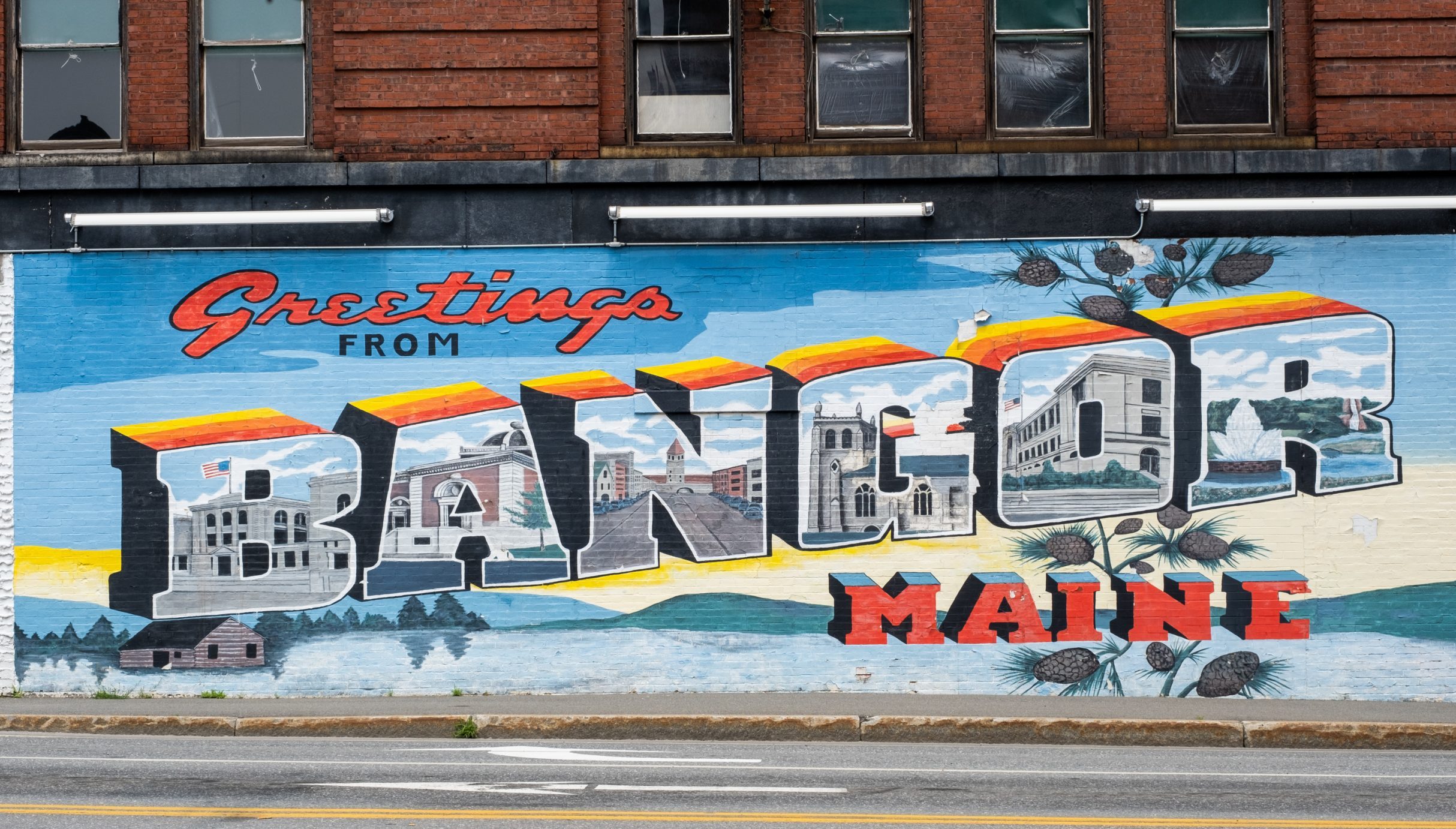
Free Choice Options for Tuesday, June 30, 4:30-6 pm
After the end of the afternoon breakout session and before dinner, participants are encouraged to choose from any of the following options that interest them. Note: Our Small Group Dialogue Session 1 will end by 4:00 PM on Tuesday to allow time for networking and transition to the cultural, educational and recreational “free choice” activities planned for participants.
4:30-6 pm
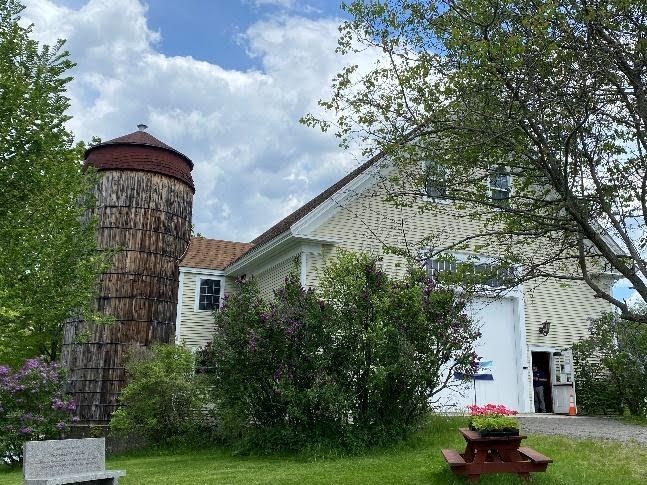
Join a small group guided tour or explore on your own.
Explore Maine’s rural educational and agricultural history through two historic buildings—a three-story 1833 post and beam barn and an 1855 one-room schoolhouse on the UMaine campus near the student Union contain artifacts from Maine’s early agricultural history, as well as a carriage house and blacksmith shop.
4:45-5:45 pm
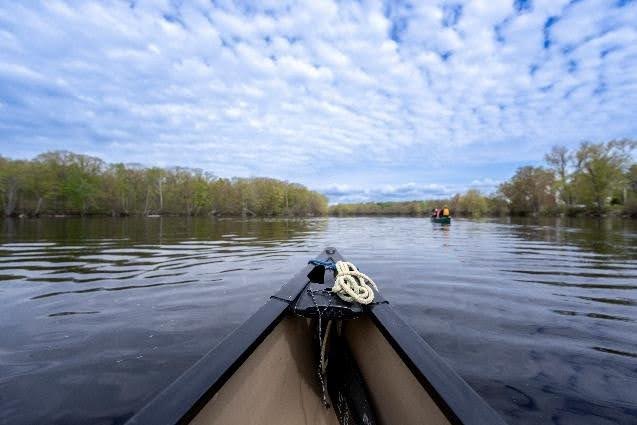
Canoeing on the Stillwater
Relax and unwind with a guided canoe trip on the peaceful Stillwater River with registered Maine Guide Dr. Lauren Jacobs from the Outdoor Leadership program in the College of Education and Human Development. You’ll glide past the quiet shoreline and river islands, home to eagles’ nests and other wildlife, and with rapid dams at either end.
Space is limited so register early for this event. Participants should wear comfortable clothing and shoes or sandals that can get wet. Transportation from the Hotel URSA to the canoe site (about a 10 minute walk) will be provided.
Free Choice Options for Wed., July 1, 4:45- 6 pm
The Whole Group Harvest session at Wells will end by 4:00 to allow time for networking and transition to other “free choice” activities planned for participants.
5-6 pm
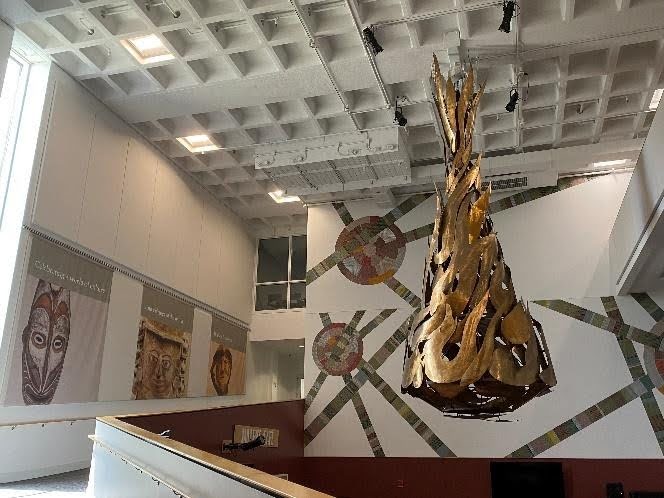
Join a guided tour of this museum from either 4:45-5:15 or 5:15-5:45 pm (up to 25 people per tour)
Located on the second level of the Collins Center for the Arts, next door to Shibles Hall, this museum houses a world-class collection of artifacts from Indigenous groups in Maine, the US, as well as Central and South America. Maine has five native tribes (the Penobscot, Passamaquoddy, Mi’kmaq, and Maliseet/ Wolastoq) collectively known as the Wabanaki people (or People of the Dawn). The University of Maine sits on Marsh Island, formerly the home of the Passamaquoddy. Maine law passed in 2001 requires K-12 educators to incorporate Maine Studies and Maine Native American Studies into the classroom curriculum. The Hudson Museum provides important resources for educators and the public. Faculty from the College of Education and Human Development also consult with and guide school districts to strengthen this part of their curricula. The Wabanki Center on campus provides opportunities for research, outreach, and education for university students, K-12 Maine educators, and others.
Virtual Reality for Teaching and Educator Preparation
Faculty and staff in the College of Education and Human Development are using virtual reality tools and other tools in innovative ways to help prepare future educators and to conduct research. Participants will have time to select two different activities with live, interactive demonstrations, all in Shibles Hall.
5:00-6:00 pm
A. Mursion Lab
Join a small group demonstration from either 5:00-5:30 or 5:30-6:00 pm (limit 25-30 people per group) in Shibles Hall, room 207
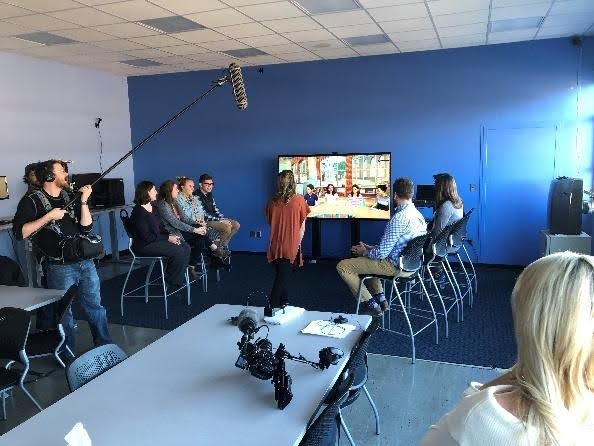
Undergraduate education majors begin developing an educator mindset as well as their preservice classroom management and teaching skills during the first semester of college through an immersive video program. Mursion, formerly Teach Live, was developed at the University of Central Florida. The program uses student avatars and a live host to simulate a classroom for a selected grade level. Our education students are prompted to reflect in the moment, get feedback from peers and educators, and observe each other during their role play in a safe, low-stakes setting. Then they move from the virtual to real-world field experience to hone their skills in PK-12 schools. We will engage participants to demonstrate how this platform is used.
4:45-5:45 pm
Join a small group demonstration from either 4:45-5:15 or 5:15-5:45 pm (limit 25 people per group) in Shibles Hall, room 212
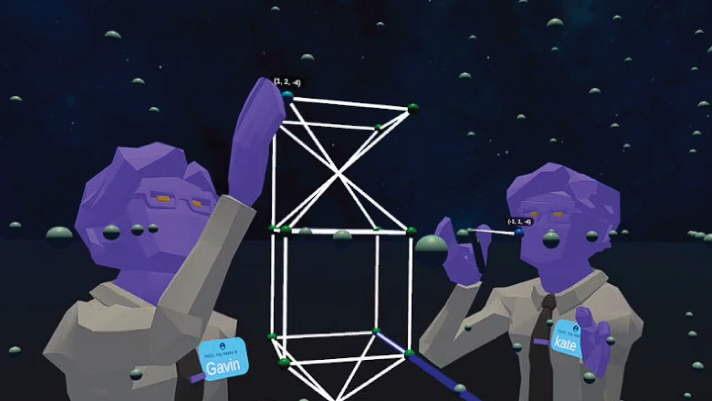
Researchers in the Immersive Mathematics in Rendered Environments (IMRE) Lab use virtual and augmented reality math and science learning environments to investigate how students perceive and reason about geometric objects and space and how this type of technology can be used by classroom educators to strengthen middle and secondary level education as well as teacher preparation. We will involve participants in a live demonstration of this tool and lab.
4:45-5:45 pm
C. SunRule Demonstration
Join a small group demonstration from either 4:45-5:15 or 5:15-5:45. Groups will start in Shibles Hall room 316, then move outdoors
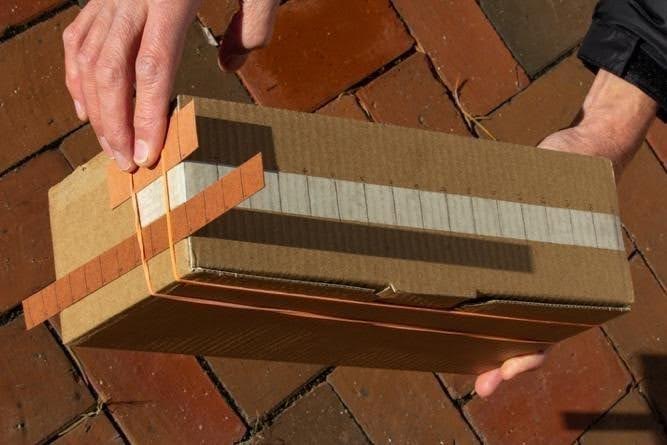
Space is limited so register early for this event. Participants should wear comfortable clothing and shoes or sandals that can get wet. Transportation from Math education faculty members Dr. Justin Dimmel and Dr. Eric Pandiscio have designed an interactive device that uses sunlight and shadows much like a sundial to perform mathematical operations such as multiplication and division of positive numbers. They collaborated with UMaine mechanical engineering students to produce an inexpensive, mobile SunRule that is 3D printed for use in classrooms and are conducting research with fifth-grade students in Maine currently. They also collaborated with UMaine sculptors and others to produce a more artistic version as a permanent installation in Orono’s Webster Park along the Stillwater River, with more public installations planned.
Hotel URSA to the canoe site (about a 10 minute walk) will be provided.